If you are drawn to the charm of New Orleans architecture, the Garden District and Uptown can feel like a dream and a puzzle at the same time. You may love the look of a grand porch, cast-iron fencing, or a classic shotgun facade, but the right choice often comes down to how that home style fits your daily life. This guide will help you understand the most common home styles in the Garden District and Uptown, what makes each one distinct, and what to think about before you buy. Let’s dive in.
Garden District vs. Uptown
The Garden District and Uptown share deep 19th-century roots, but they do not offer the same housing mix. According to the City of New Orleans HDLC Garden District overview, the Garden District began as Faubourg Livaudais in 1832 and developed into a compact, mansion-heavy historic district with many large double lots, landscaped grounds, and cast-iron fences.
Uptown is broader and more varied. The Preservation Resource Center’s Uptown overview notes that it is the city’s largest National Register Historic District, with more than 10,000 significant historic buildings. In practical terms, that means you will find everything from stately avenue homes to cottages, shotguns, doubles, bungalows, and some newer infill.
Define “double” early
In New Orleans, the word double can mean different things, which can confuse buyers fast. The HDLC architectural styles guide explains that local usage may refer to a double shotgun, which is a floor plan with two mirrored units sharing a wall, or a double-gallery house, which is a two-story facade with stacked porches.
That distinction matters when you are reviewing listings. One meaning describes how the home is laid out, and the other describes how the front of the home looks. If you are house hunting in Garden District or Uptown, it helps to ask right away whether “double” refers to the plan, the facade, or both.
Grand mansions and villas
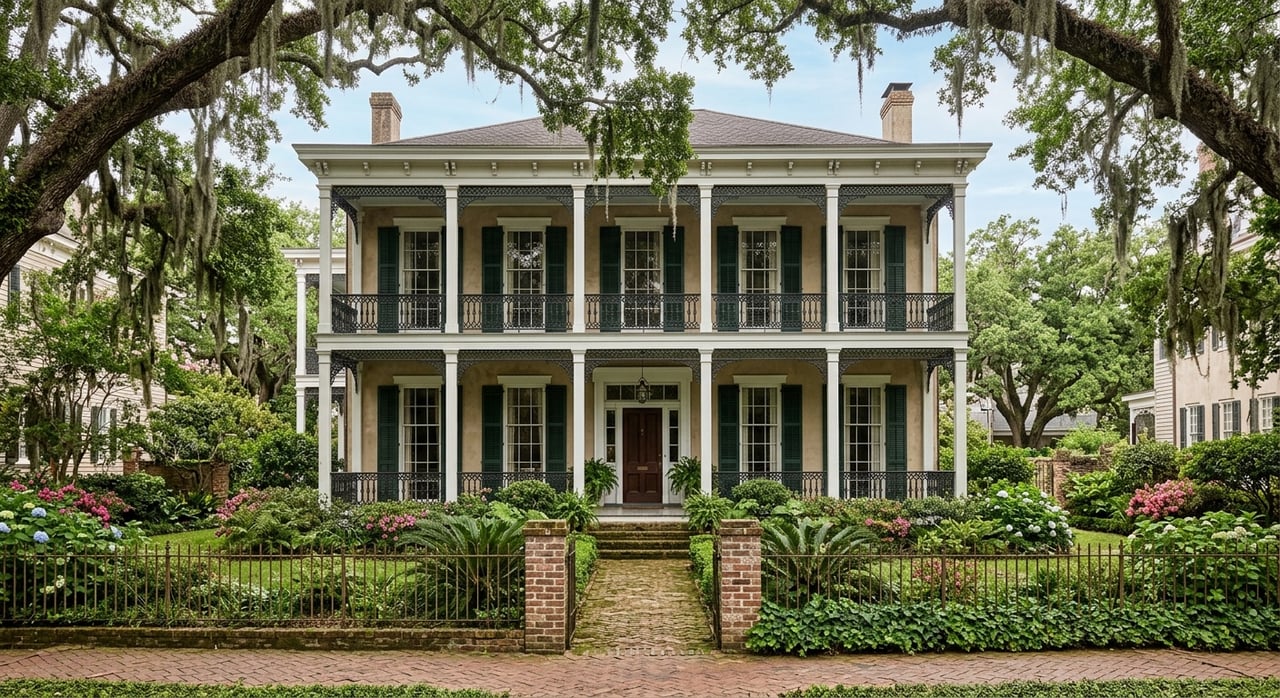
When people picture the Garden District, this is often the image they have in mind. The Preservation Resource Center’s Garden District overview highlights Greek Revival and Italianate mansions and cottages, often raised above grade with full front galleries, service wings, and more formal room arrangements.
These homes usually sit on larger lots and offer the strongest sense of historic drama. If you want formal entertaining spaces, substantial architectural detail, and a classic New Orleans streetscape presence, this category may be the one that speaks to you most.
Still, there is a tradeoff. Larger and more ornate homes generally come with more exterior surfaces, more historic materials, and more detail to maintain. They can offer unmatched character, but they usually ask more from you in terms of upkeep and planning.
Raised center-hall cottages
A raised center-hall cottage offers a middle ground between a mansion and a more compact vernacular home. The HDLC architectural guide describes this type as a symmetrical house, often two rooms deep, with a central hallway and a deep front porch, typically raised on piers.
For many buyers, the appeal is balance. You get more separation between rooms than a shotgun usually provides, plus the comfort and curb appeal of a broad front porch. The raised design also reflects how New Orleans homes responded to local conditions, including airflow and flood exposure.
That means you should expect stairs, but also practical benefits. Raised homes can offer shaded outdoor space, better ventilation, and a form that developed with the local climate in mind.
Double-gallery houses
The double-gallery house is one of the city’s most recognizable forms. As the HDLC guide explains, this is a two-story house with stacked porches running across the facade.
In the Garden District and Uptown, these homes often appeal to buyers who want space and architectural presence without stepping all the way into mansion scale. They can feel elegant and distinctly New Orleans, especially on blocks where porches and mature landscaping shape the rhythm of the street.
From a lifestyle standpoint, these homes often provide a useful middle option. You may get more living area and a more formal layout than a shotgun, while still keeping a size that feels manageable compared with a large estate-style property.
Shotguns, double shotguns, and camelbacks
The shotgun is one of New Orleans’ defining house types, especially across many Uptown blocks. The HDLC architectural guide describes it as a long, narrow house with rooms arranged one behind another and no hallway. A double shotgun contains two mirrored units, while a camelback adds a rear second story.
These homes can be simple or richly detailed. The same source notes that they may include Italianate, Eastlake, Queen Anne, or Victorian trim, which means a modest footprint does not always mean a plain exterior.
For everyday living, layout is the key question. Because the classic shotgun plan is linear and hallway-free, privacy can be more limited and furniture placement matters more. Some later modifications add hallways or upper-level space to better match modern expectations.
Shotguns and doubles can be especially appealing if you want a historic address with a more space-efficient footprint. They are also a useful style to understand if you are considering small multifamily or income-producing property in Uptown.
Bungalows, raised basements, and later infill
Not every home in Uptown fits a 19th-century mold. The HDLC architectural guide identifies bungalows, raised bungalows, and basement houses as part of the area’s broader housing stock, especially in the wider Uptown and Carrollton area.
These homes can be a strong fit if you want historic context with a slightly later architectural feel. In some cases, they may offer floor plans or proportions that feel more familiar to today’s buyers while still connecting you to the character of the neighborhood.
It is also helpful to know that newer single-family construction exists in parts of the broader Uptown market. If you love the location but want a more contemporary ownership experience, infill homes can sometimes provide that option within the area’s wider architectural mix.
Condos in historic settings
If you want Garden District character without the scale of a large detached home, a condo may be worth considering. City permit records show examples such as a condo unit renovation on Prytania Street within an existing Garden District multifamily building.
For some buyers, that combination is ideal. You can enjoy a historic setting and strong location while taking on less exterior stewardship than you would with a standalone historic house. Condos and smaller ownership formats may also fit buyers who want a lock-and-leave lifestyle or more predictable maintenance needs.
How style affects daily life
Architecture is not just about appearance. In the Garden District and Uptown, style often shapes privacy, stairs, outdoor living, parking, and maintenance in ways that matter every day.
A useful way to compare homes is to focus on four questions:
- How much space and privacy do you want?
- How much original historic material are you comfortable maintaining?
- Do you need off-street parking or a larger lot?
- Are you comfortable with preservation review for exterior changes?
These questions help separate admiration from fit. A home can be beautiful on first showing but still feel wrong for your routine if the layout, lot use, or upkeep expectations do not match how you live.
Preservation review matters
The Garden District is not just visually distinctive. It is also regulated as a local historic district and a National Historic Landmark and National Register district, according to the HDLC Garden District report.
That matters if you plan to make changes. The same source notes that in local-district areas, the HDLC reviews new construction and additions, and demolitions involve public hearings. The HDLC introduction to guidelines also explains that exterior changes in historic districts are governed by compatibility rules, while interior flexibility is often greater.
For buyers, the takeaway is simple. If you value freedom to make major exterior changes, you should ask detailed questions before you buy. If you value continuity, historic character, and neighborhood stewardship, these rules may feel like a benefit rather than a burden.
Parking and lot expectations
Lot size and parking can look different here than buyers expect in other markets. The Garden District survey notes that while many homes sit on double lots, many residents still rely on street parking.
That is why parking should be part of your search strategy from the start. Some buyers gladly accept street parking in exchange for larger historic houses and gardens, while others will want off-street parking high on their must-have list.
Which style may fit you best?
If you are choosing between Garden District and Uptown home styles, this quick comparison can help:
| Home style | Best fit for buyers who want | Main tradeoff |
|---|---|---|
| Grand mansion or villa | Formal space, iconic architecture, larger lots | More upkeep and less flexibility for changes |
| Raised center-hall cottage | Better room separation, porch living, classic character | Stairs and ongoing historic-home maintenance |
| Double-gallery house | Strong curb appeal, generous space, classic facade | More exterior features to maintain |
| Shotgun or camelback | Efficient footprint, historic charm, smaller scale | Less privacy in traditional layouts |
| Bungalow or raised basement home | Historic neighborhood feel with later-era design | May offer less of the classic Garden District look |
| Condo in a historic building | Smaller-footprint ownership, less exterior responsibility | Less private outdoor space or less control over building decisions |
Making a smart decision in Garden District and Uptown
The right home style is the one that supports your life, not just your Pinterest board. In these neighborhoods, the visual charm is real, but so are the practical questions around layout, stairs, parking, exterior upkeep, and preservation review.
When you understand the difference between a mansion, a center-hall cottage, a double-gallery house, a shotgun, or a condo in a historic building, you can search with more confidence. If you want guidance comparing architectural character with day-to-day function, Joseph S. Pappalardo Jr. can help you evaluate your options with a local, strategic point of view.
FAQs
What is the difference between Garden District and Uptown home styles?
- The Garden District is generally more compact and known for larger mansion-scale homes on landscaped lots, while Uptown has a much wider mix that includes mansions, cottages, shotguns, doubles, bungalows, and some newer infill.
What does “double” mean in New Orleans real estate?
- In local usage, “double” can mean a double shotgun with two mirrored units sharing a wall, or a double-gallery house with two stacked porches across the front facade.
Are shotgun homes common in Uptown New Orleans?
- Yes. Shotgun homes are a defining vernacular type in many Uptown blocks, and they may appear as single shotguns, double shotguns, or camelbacks.
Are Garden District homes subject to historic review?
- Yes. The Garden District is a local historic district, and certain exterior changes, additions, new construction, and demolitions are subject to HDLC review.
Are condos available in the Garden District?
- Yes. Condos can exist within historic multifamily buildings and may appeal to buyers who want a smaller-footprint ownership option in a historic setting.
What should buyers compare when choosing a Garden District or Uptown home?
- Focus on size and privacy, the amount of original material you are willing to maintain, lot and parking needs, and your comfort level with preservation review for exterior changes.