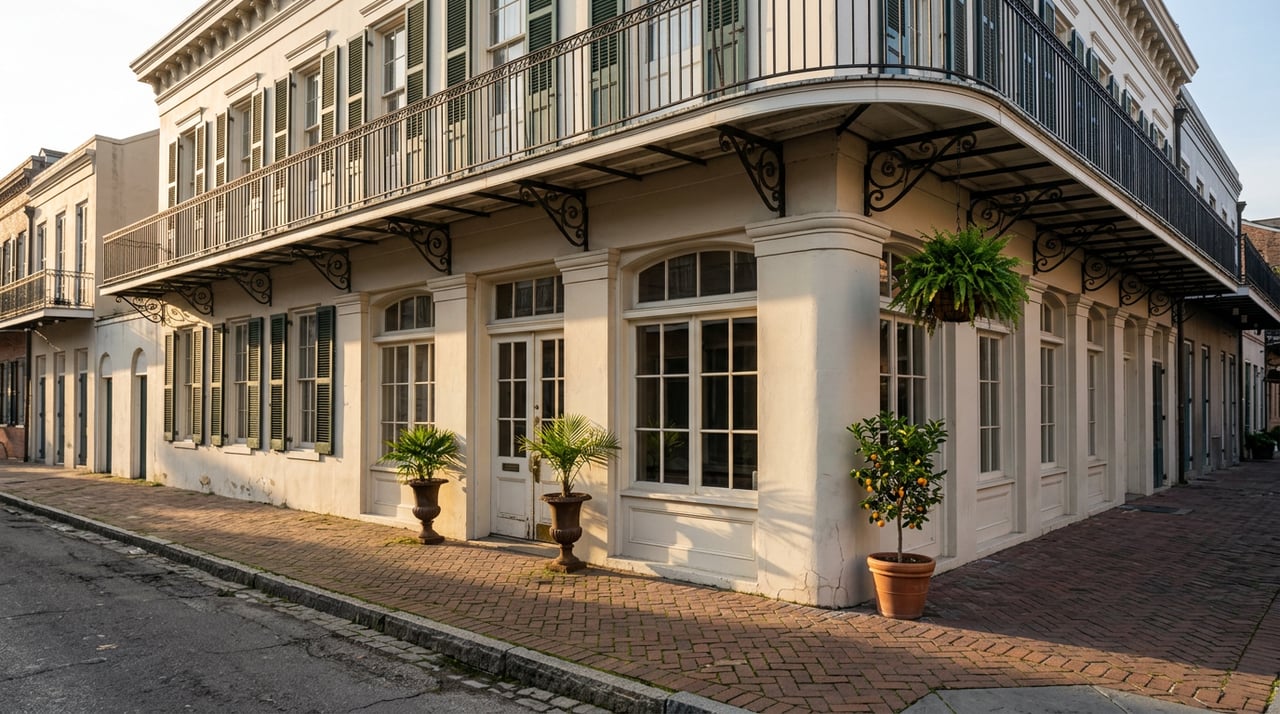
On a Tuesday afternoon in January 2021, customers kept walking through the door at 1001 Dauphine Street just to say goodbye. Louis Matassa, then 70 and still working 80 to 85 hours a week behind the register his grandfather had put there in 1924, had announced the day before that the store was closing for good. Neighbors came in for one last pack of pasta, one last photo, one last conversation with the man who had been running the corner since he was 14 years old. William Fagley, who lived next door and considered the market an extension of his own house, wasn't alone in treating it that way. For a century, Matassa's had been the place that took in packages when nobody was home and kept a running account of who was sick, who was traveling, and who needed checking on.
Five years later, that same corner is still open, still selling groceries, and still figuring out exactly what it's supposed to be. Since 2016, it's passed through three distinct chapters, and each one has bolted something new onto the last owner's model rather than starting from scratch. If you live within a few blocks of Dauphine and St. Philip, the store's slow reinvention is worth paying attention to, because it's quietly become the neighborhood's longest-running experiment in what a shrinking residential Quarter still needs from a corner store.
A Partner, Then a Closure
The first turning point came in 2016, when Louis Matassa nearly sold the business outright. Instead, he brought in Vincent Catalanotto Jr., of the Vincent's restaurant family, as a partner. The store got an interior refresh, and the Matassa name stayed over the door. It was a patch, not a pivot: the same deli counter, the same tight aisles, the same rhythms that had defined the place since it opened when the lower Quarter was still known as Little Palermo, back when roughly 80 percent of the neighborhood's residents were Sicilian immigrants, according to the 1910 census cited by longtime chroniclers of the store's history.
That patch held for four years. Then came COVID, and the drop in foot traffic that no amount of goodwill could offset. Louis and Catalanotto closed the doors in January 2021.
"It's more than just a market, it's a meeting place."
That line, as WGNO reported, helps explain why the store didn't stay shut.
The Lease That Brought Back the Deli
The very next day after the closure made news, a new operator stepped forward. Louis and Catalanotto, who still owned the building, leased it to Richard Djapni, a Monroe-based businessman who ran a string of independent groceries and pharmacies around Louisiana, and his partner Nasser Hasan. The new Matassa's reopened about a month later with the deli back in action and the old delivery bikes back on the sidewalk, but it also added things the family-run version never had: Amazon Locker pickup, Instacart, Uber Grocery delivery, and a coffee bar. A new beverage coordinator built out the beer, wine, and spirits selection. Half-price pizza on Wednesdays, a small tradition from the store's earlier decades, came back too.
This version of Matassa's was the first to treat the store as something that had to compete with modern delivery apps as much as with other corner groceries. It kept the muffuletta and the fried chicken, but it layered a logistics operation on top of a neighborhood fixture that had run for nearly a century on a phone line and a bicycle.
The Sale That Changed the Math
By late 2025, ownership had changed again. Zahran Bazzar, who had previously developed Big Easy Fresh Markets in Mid-City, became the current owner of Matassa's. Reporting from 2026 describes Bazzar purchasing not just the business but the building itself, with plans to keep the market's tradition intact while expanding what it offers.
Bazzar also owns Lebanon Grill nearby. Matassa's now runs three separate food counters under one roof: Matassa's Po-Boys, Lebanon Grill, and RedBird Fried Chicken, alongside the grocery shelves and bottle shop that have always been there. That's a meaningfully different business than either the 2016 partnership or the 2021 relaunch. Instead of one deli counter, the store is now running three quick-service concepts simultaneously, testing which one the neighborhood actually wants on a given night without having to commit to a single identity.
Waiting on the City for the Fourth Move
The next expansion is already in motion, and it's the one worth watching if you're on that block. Bazzar has applied to change the zoning on the adjacent property at 1007 Dauphine Street to permit a standard restaurant, distinct from the counter-service model already running inside 1001 Dauphine. The plan centers on wood-fired pizzas with Mediterranean flavors that echo Lebanon Grill, and Bazzar has said the core of the new menu will build out from there.
Because the property sits in a historic district, the request has gone through a compulsory neighborhood participation process, with the city gathering feedback from surrounding residents and businesses before deciding on the zoning change. As of this writing, that decision hasn't been finalized. It's the kind of detail that's easy to miss if you don't live close enough to have gotten the notice, but it explains why the counters inside the existing market feel more like a proving ground than a finished concept. The store has already run three takeout formats without needing special zoning. A sit-down restaurant next door is a different animal, and the city process reflects that.
The Rest of the Corner-Store Map
Matassa's gets attention because it's the oldest and most storied option, but it isn't the only place residents actually rely on for groceries. The Quarter's day-to-day food shopping runs through a small handful of specific addresses:
- Rouses Market at 701 Royal Street, which took over the building that once housed an A&P and remains the closest thing the Quarter has to a full supermarket, tight aisles and all.
- Rouses Market on Baronne Street in the CBD, the larger-format option a short walk away for anyone doing a real grocery run rather than a quick top-off.
- Central Grocery and Deli, the shop that put the muffuletta on the map and still draws a line for it most afternoons.
- Brothers Food Mart, one of several 24-hour locations scattered through the Quarter and CBD, open around the clock and known as much for the fried chicken as for the snacks and gas.
- Verti Marte, the other late-night deli institution locals lean on when nothing else is open.
- Smaller operators like Louisiana General Store and Toulouse House Grocery, which round out the corner-market options for households who need something closer than a full supermarket trip.
Against that backdrop, Matassa's stands out as the only one of the group that's independently owned, family-founded, and still trying to figure out its own shape in real time. Rouses is a regional chain with a fixed format. Central Grocery has run the same core concept for generations. Matassa's has moved through three distinct chapters in a decade, adding a new layer of business each time.
What the Corner Is Actually Testing
None of this turnover reads as failure. It reads as a slow, expensive process of figuring out exactly what a two-block radius of Quarter residents will support, one addition at a time. The 2016 partnership tested whether an outside investor could keep the original format alive. The 2021 lease tested whether delivery apps and a coffee bar could pull in the customers a straight deli counter was losing. The current ownership is testing whether three food counters and, pending the city's decision, a full restaurant can coexist with a working grocery store on a block where the residential population has thinned out but never disappeared.
That's the part worth sitting with if you live nearby: a shrinking resident base in the Quarter hasn't meant this corner gets left behind by the businesses that serve it. It's meant the opposite. The store has kept adapting its format while holding onto its place in neighborhood life. If the restaurant at 1007 Dauphine gets approved, it won't be a departure from that pattern. It'll be the next line in the same experiment.
If you're the kind of Quarter resident who tracks changes like this one block at a time, Wurth Real Estate Services spends the same kind of attention on the neighborhoods it works in, long before anyone's thinking about buying or selling. Follow along for more of these local dispatches, and reach out anytime you want a broker who already knows the corner you're asking about.
This article is general information, not legal, tax or financial advice. Consult a qualified professional about your situation.